
Orthognathic Surgery (Jaw Surgery) Indianapolis, IN
Orthognathic surgery is needed when jaws don’t meet correctly and/or teeth don’t seem to fit with jaws. Teeth are straightened with orthodontics and corrective jaw surgery repositions a misaligned jaw. This not only improves facial appearance, but also ensures that teeth meet correctly and function properly.
Who Needs Orthognathic Surgery?
People who can benefit from orthognathic surgery include those with an improper bite or jaws that are positioned incorrectly. Jaw growth is a gradual process and in some instances, the upper and lower jaws may grow at different rates. The result can be a host of problems that can affect chewing function, speech, long-term oral health and appearance. Injury to the jaw and birth defects can also affect jaw alignment. Orthodontics alone can correct bite problems when only the teeth are involved. Orthognathic surgery may be required for the jaws when repositioning is necessary.
Difficulty in the following areas should be evaluated:
- Difficulty in chewing, biting or swallowing
- Speech problems
- Chronic jaw or TMJ pain
- Open bite
- Protruding jaw
- Breathing problems
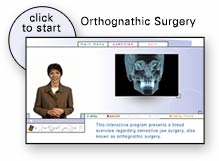
Orthognathic Surgery Presentation
To provide you with a better understanding of orthognathic surgery, we have provided the following multimedia presentation. Many common questions pertaining to orthognathic surgery are discussed.
Technology & Orthognathic Surgery
Our Doctors use modern computer techniques and three-dimensional models to show you exactly how your surgery will be approached. Using comprehensive facial x-rays and computer video imaging, we can show you how your bite will be improved and even give you an idea of how you’ll look after surgery. This helps you understand the surgical process and the extent of the treatment prescribed. Our goal is to help you understand the benefits of orthognathic surgery.
If you are a candidate for corrective jaw surgery, Potter, Tancredi, Montefalco, Eden, Davis, Bojrab, Beker, Pruitt, Schier, Montes, Kirkup or Rohe will work closely with your dentist and orthodontist during your treatment. The actual surgery can move your teeth and jaws into a new position that results in a more attractive, functional, and healthy dental-facial relationship.
Patient Reviews for Corrective Jaw Surgery / Orthognathic Surgery
> Read all of our Reviews
> Write a Review
Indiana Oral & Maxillofacial Surgery Associates
Patient Review
I had jaw surgery 33 years ago from Dr Heidleman still today my jaw is 100% God bless the Dr.
- Scott B
Patient Review
Dr. Montes was a referral by a local Oral Surgeon of mine. I can’t say enough good things about this surgeon. I’m glad he was the one who did my jaw surgery. It’s well worth the long drive there to see him. Thank you Dr. Montes.
- Keith H
Patient Review
I came in after an accident in a lot of pain. Dr. Bojrab was very knowledgeable and Michelle was so helpful. Dr. Bojrab and his staff made the most difficult period of my life bearable. The recovery period was long after surgery. My mouth was wired shut for 6 weeks. But, Dr. Bojrab and Michelle prepared me for the surgery and recovery process. I felt well cared for during surgery and at every office visit. I would recommend them to anyone. I wish I could give them a 6 star rating because they deserve it!
- Kathy W
Patient Review
I was referred to Dr. Schier because I had a bone growth on the outside of my jaw, which is called Tori. I have had this condition all of my adult life but in recent months I started experiencing pain. After a consultation with Dr. Schier he assured me he could help. The day of the procedure Dr. Schier put me at ease was able to correct the issue and followed up with a phone call that evening. Every person we interacted with at the office was caring, friendly, and professional. I highly recommend this office.
- Sharma B
Patient Review
Dr. Bojrab and his staff were great. He took the time to explain things and answer my questions. He made me feel very comfortable during an unpleasant time in my life. (Jaw fracture and wiring). I will definitely come back if I ever need anything else done!
- Chris S
Patient Review
I was totally at ease because the procedure was explained to me. Postoperative instructions were clear and concise.
- Linda G
Patient Review
Great job. No pain
- Frank B
Patient Review
Great place did great work on my son...
- Jasmine G